

Planning a trip is exciting, but it can be a lot to manage. Flights, hotels, transportation, itineraries and travel insurance all require time and attention. That’s where professional travel planning services shine.
Local travel planning services offer insider knowledge, expert recommendations and personalized support before, during and after your trip. Many also offer membership options that come with exclusive benefits and special rates with extra perks. Experienced travel planners help travelers turn ideas into seamless experiences. Whether you’re heading to a nearby city or crossing continents, working with a local travel service can save you time, protect your budget and reduce stress.
Here is a guide from AAA Central Penn on how to find a travel agent.
Why Use a Local Travel Planning Service?
One of the most common questions is how much it costs to have a travel agent plan a trip, because when you’re planning a getaway, budget is important. But not only is a travel agent’s cost marginal to nothing — the peace of mind you get is priceless.
Working with a travel planning service based in your community can make a big difference, no matter where your trip takes you. A professional can help you plan everything from a weekend getaway in the U.S. to a multicountry tour overseas. They provide industry expertise and trusted networks that reach far beyond the region. Here’s more about what sets them apart:
- Industry access: Local travel planners often belong to large global travel networks. This gives them access to preferred rates, package deals and exclusive experiences, like securing perks such as room upgrades, early check-ins or private tours you can’t easily find online.
- Personalized service: These professionals take the time to understand your travel style, preferences and expectations to give you recommendations based on your interests.
- Help when plans change: A travel professional acts as your advocate if something goes wrong during your travels. From flight delays to itinerary shifts, they help rebook, reroute or troubleshoot — often more quickly than call centers or automated systems.
- Expertise backed by accountability: Local planners are real people you can reach by phone, email or in person. That personal accountability often translates to more reliable and responsive support before, during and after your trip.
How to Find a Travel Agent
One of the easiest ways to begin is by looking for an established agency with a local presence. Many reputable organizations have physical offices in various communities. Working with someone nearby simplifies communication.
Before choosing a travel planning service, it helps to clearly define your travel goals. This ensures your advisor fully understands your priorities. Think about:
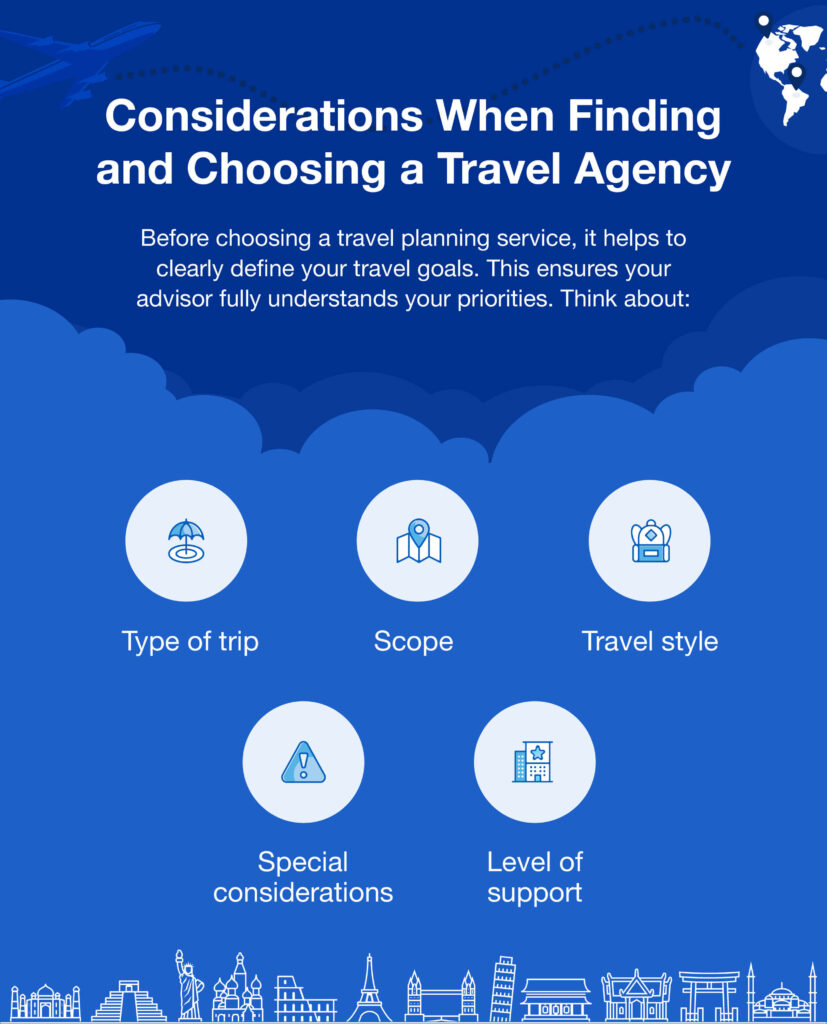
- Type of trip: Is this a family vacation, a honeymoon, a business trip, a cruise or an adventure tour?
- Scope: Would you prefer to stay in one location locally or opt for a multicountry itinerary?
- Travel style: Do you prefer a structured schedule or a more flexible approach to exploration?
- Special considerations: Do you or anyone in your party have accessibility needs or specific dietary requirements? Do you need group coordination or want unique experiences?
- Level of support: Are you looking for full-service planning or just assistance with specific components, such as flights or accommodations?
When you know what you want, it’s time to find a local travel planner who meets your expectations. You need someone reliable, experienced and ready to help you enjoy your travels.
1. Check Credentials and Accreditation
It’s smart to ask for a travel service’s credentials and verify them through the issuing organizations. Active, valid certifications suggest the planner is well-connected, trained and accountable to recognized industry standards.
Credentials and accreditations are verifiable signs that a travel planner adheres to recognized standards of industry professionalism. They also show the planner meets specific training and financial stability requirements, ethical codes and regulatory compliance.
Key credentials include the International Association of Travel Agents Network (IATAN) and the American Society of Travel Advisors (ASTA). Some states or jurisdictions require agencies to obtain local or state business licenses and seller-of-travel registrations as well.
2. Read Reviews and Testimonials
Reviews and testimonials give you firsthand insight into how planners communicate and handle challenges, and what clients value most. Look for detailed feedback, sharing more than general praise, to find the real strengths this service has to offer. Also, pay attention to patterns across multiple reviews.
If many travelers consistently highlight clear communication or smooth trip execution, that’s a strong signal of reliability. Likewise, seeing how a service responds to the occasional negative review reveals professionalism and accountability.
Stick to trusted platforms like Google, Yelp or other verified travel forums for the clearest picture of what to expect.
3. Evaluate Experience and Specializations
Experience is about more than years in the industry. It’s about the depth and relevance of that experience. A service that routinely organizes the type of trip you’re planning can offer more informed guidance and smoother coordination.
Destination knowledge is equally important. A planner who is familiar with your intended region can anticipate seasonal trends, visa requirements and cultural nuances that make travel more enjoyable.
Specialization often comes with stronger connections to local guides and suppliers, which can elevate your travel experience in ways online booking engines can’t match.
4. Assess Personalization and Communication Style
The best planners take time to understand your travel style and priorities before making recommendations. From the first conversation, pay attention to whether they ask thoughtful questions and provide options that reflect your interests. Good communication goes beyond responsiveness — it is clear, and they are willing to collaborate throughout the planning process.
A reliable planner keeps you informed at every step, explains trade-offs clearly and adjusts plans as needed. How they handle last-minute changes or disruptions also speaks volumes about flexibility and professionalism. A travel planner who communicates well can make complex itineraries feel simple, so you know that your trip is in good hands.
Digital Tools vs. Human Advisors
Technology plays a central role in every stage of the travel experience. From booking flights to customizing itineraries, digital tools offer unprecedented convenience. At the same time, human advisors are an important part of the process, especially when it comes to personalization, problem-solving and expert insight.
Digital tools give you immediate access to information and booking platforms. Mobile apps can manage reservations, send you flight updates and store digital documents so you have more control over your plans. Many also offer map-based search functions to simplify your logistics, but they can’t provide personalized support during unexpected disruptions.
Where digital platforms excel in access, human advisors excel in personalization. They also act as a single point of contact if plans change, which gives you a level of reassurance that automated systems can’t match.
The Hybrid or “Phygital” Advantage
Many travelers find that the best option is a combination of both digital tools and human advisors. Phygital travel planning merges the efficiency of digital tools with the expertise of human advisors. You can use this model to research and compare options on your own time, while relying on professionals to refine details, handle complex bookings or offer personalized recommendations.
Travelers may use the app to browse flights and hotels and work with an advisor to build a cohesive itinerary. They receive real-time updates and digital alerts, knowing they have someone to call or message if they need support during their travels. It’s the best of both worlds.
What to Expect From a Travel Advisor
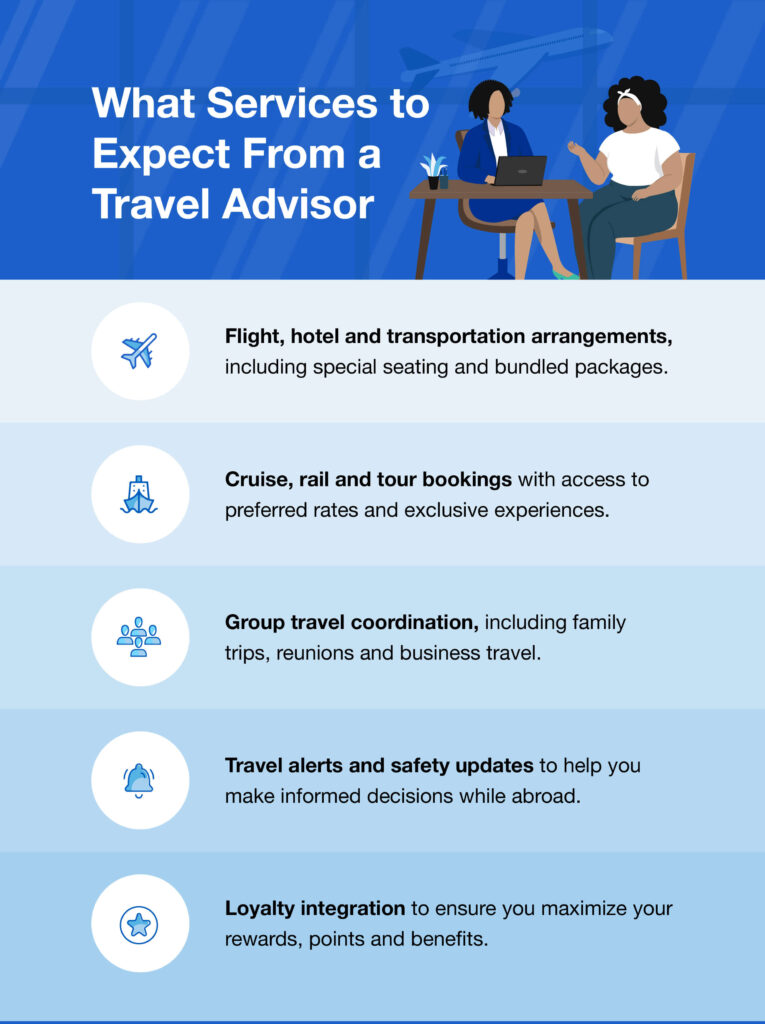
Advisors streamline every stage of your travel-planning process. You still have control of your trip, with the added bonus of a partnership where your interests, priorities and travel style guide the planning. Typical services often include:
- Flight, hotel and transportation arrangements, including special seating and bundled packages.
- Cruise, rail and tour bookings with access to preferred rates and exclusive experiences.
- Group travel coordination, including family trips, reunions and business travel.
- Travel alerts and safety updates to help you make informed decisions while abroad.
- Loyalty integration to ensure you maximize your rewards, points and benefits.
The Value of Membership-Based Travel Planning
Membership-based travel planning services give you a structured system for accessing benefits. These are often tied to an annual or monthly subscription fee that goes beyond what traditional one-off travel agents provide. Services combine exclusive perks, elevated support and often savings that can more than offset the membership costs. This is especially helpful if you travel frequently, want high-quality experiences or have complex itineraries.
You can also get tailored travel insurance, car rental and hotel discounts. In some cases, you can save on expediting your U.S. passport or travel visa with approved service providers.
How to Maximize Your Membership Benefits
When used strategically, a membership-based travel service can provide exceptional value. Beyond the initial perks, you will find benefits that enhance every stage of your journey. From savings on gas to meal kits for your Airbnb, review the full scope of benefits.
You can also stack benefits strategically. Many membership services are designed to integrate with loyalty programs, which let you earn or redeem rewards on top of discounted rates. Pairing member-exclusive deals with points or miles can maximize your savings.
Finally, use support services during your travels, not just before. These services include access to assistance hotlines, travel alerts and emergency coordination. They can make a significant difference if plans change mid-trip.
Membership-Based vs. Independent Travel Services
Both membership-based and independent travel planning services have clear strengths, and choosing between them depends on what kind of support you prefer.
Membership-based services offer structured benefits and privileges. These can include bundled insurance options, pricing and dedicated member assistance. You get priority access to bookings and added perks. In contrast, independent travel services focus on à la carte planning for niche destinations such as adventure tourism.
Sustainable and Responsible Travel Planning
If environmental impact, community benefit and cultural respect are important to you, mention it to your travel agent. A conscientious travel planner can help you adopt sustainable travel practices that benefit both people and places, while still delivering memorable journeys.
They can help you select places that actively foster sustainable tourism, plan for shoulder or off-peak seasons to reduce overtourism, and plan direct routes to minimize fuel use. Through connections, they can help you support local economies by providing recommendations for local restaurants and tours. This assistance can also help you find properties with verified sustainability credentials for your stay.
Safety, Security and Peace of Mind
A trusted travel planning service can offer you resources, guidance and support to minimize risks and maximize your confidence during travels. Key areas of protection include:
- Comprehensive travel insurance: Advisors help match travelers with coverage that fits their trip. This can include protection for cancellations, trip interruptions, medical emergencies, lost luggage or travel delays.
- Emergency support: Many agencies provide or coordinate around-the-clock assistance for medical issues, border closures and flight cancellations.
- Safety information: Advisors also stay informed on global travel alerts, entry regulations and security updates. They share this information with you to help you make informed decisions and avoid disruptions.
- Trusted network connections: By working with verified partners, agencies ensure your hotel, transportation and tour providers meet recognized safety and service standards. This extra layer of vetting reduces uncertainty and builds travel confidence.
Plan Your Trip With Confidence
A well-planned trip is about more than schedules and reservations — it’s about reveling with peace of mind. By partnering with a trusted travel advisory service, you get access to expertise, emergency support and reliable safety information every step of the way.
Whether your journey takes you on a staycation or across the globe, knowing that someone is looking out for your best interest can make the experience more enjoyable and less stressful. With the right preparation, reliable resources and professional guidance, you can explore the world with confidence, focusing on the adventure rather than the “what-ifs.”

