
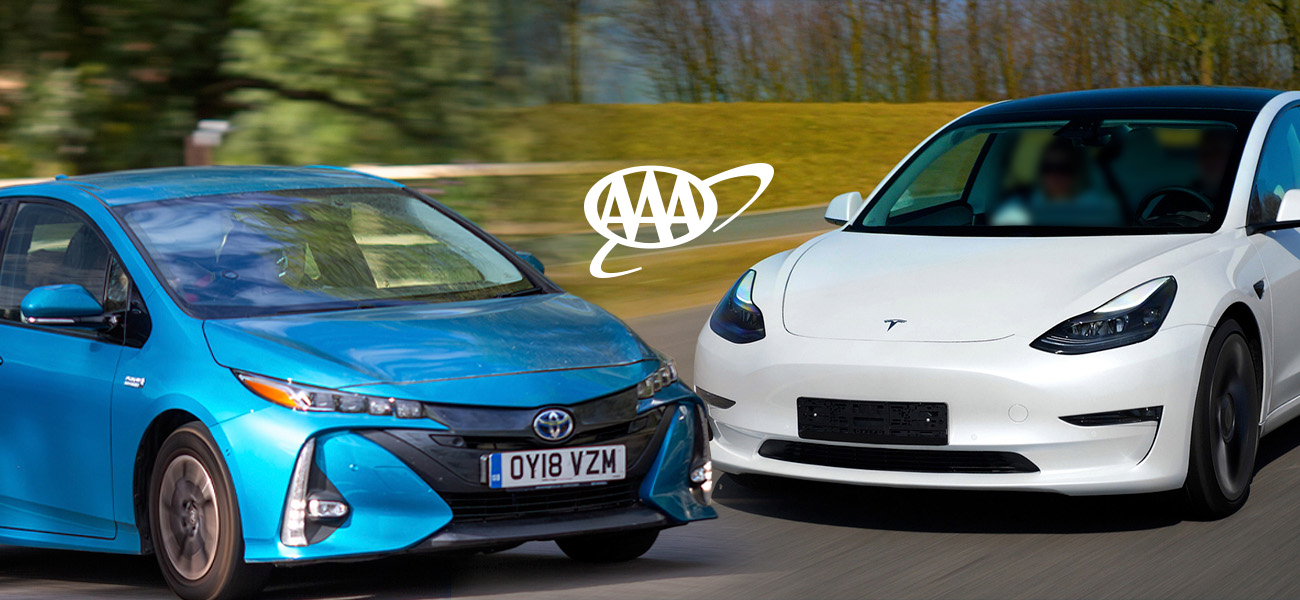
The growing trend of electrified vehicles and sustainable solutions has sparked a new generation of vehicles that don’t rely on fossil fuels. As consumer interest in the U.S. shifts toward greener car options, buyers are weighing the differences between hybrid and electric models, pitting the two revolutionary vehicles against each other.
Hybrid and electric vehicles (EVs) are similar, but they also have unique differences that set them apart performance-wise. When considering one over the other, understanding the difference between hybrid and electric cars is crucial to making the right choice.
Hybrid Vehicles
Hybrid electric vehicles (HEVs) have an internal combustion engine similar to those found in traditional vehicles. But they also have an electric motor, so essentially, they serve as both an EV and a conventional car. With a hybrid car, you have the option of driving on each power source independently or at the same time. Either way, it’s one of the top solutions to improving gas mileage and the ideal choice if you want a taste of both worlds.
However, hybrids are not all the same. While ordinary hybrids have small batteries that automatically charge using the vehicle’s regenerative braking technology, there are plug-in hybrid electric vehicle (PHEV) models with larger batteries that come with a port and need to be charged.
But what is the difference between plug-in and electric cars? A plug-in hybrid is only similar to a fully electric car in terms of its electric motor and the ability to charge it from an external source. Other than that, PHEVs still have the option of a petrol-powered engine, similar to regular hybrids.
Electric Vehicles
An electric vehicle is an umbrella term for any vehicle that features some form of electrification, which includes hybrids. However, the popular EV definition is a vehicle that is fully powered by an electric motor, and therefore operates differently from traditional fuel-based internal combustion engines.
These vehicles come with large lithium-ion batteries with varying driving ranges. They have plug-in ports that you use to charge the battery at home or at an EV charging station.
Hybrid and EV Differences
In a world where different car models, even within the same category, offer different features, EVs and hybrids can be confusing. Here’s a quick breakdown of their key differences.
| Features | Hybrid Cars | Electric Cars |
|---|---|---|
| Power type | Interchanges between gasoline and electricity | Entirely powered by an electric motor |
| Fueling | Partly fueled at a gas station and partly charged | Needs to be plugged in to recharge the battery |
| Maintenance needs | The internal combustion engine will need similar maintenance to that of traditional vehicles | Has fewer moving parts and generally requires less maintenance |
| Range | The combined power source offers a much longer driving range on average than EVs | Range is limited to various factors, including car model, size and battery capacity |
| Emissions | Produces fewer emissions than ordinary gas-powered cars | Does not produce tailpipe emissions |
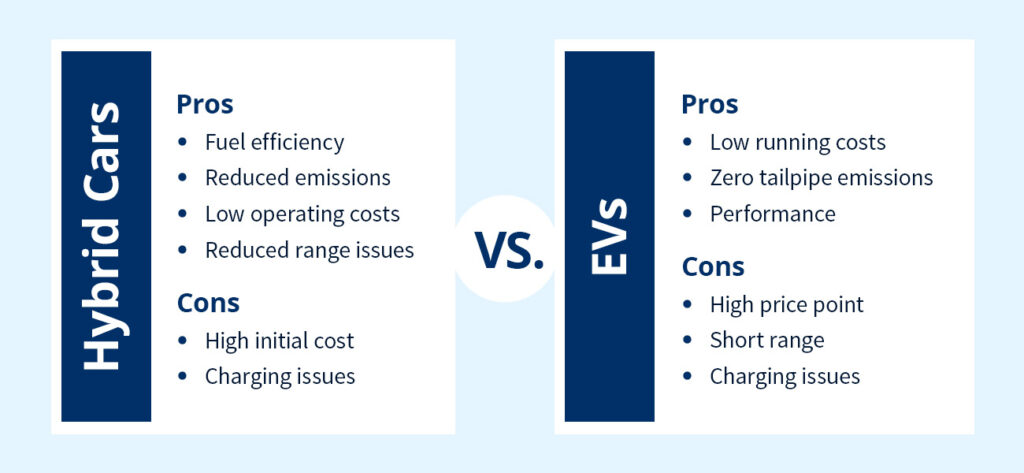
The Pros and Cons of Hybrid Cars
The benefits of choosing a hybrid car include:
- Fuel efficiency: The combination of electric motors and gasoline engines makes hybrids more fuel-efficient than conventional vehicles, as they can switch between the two power sources and preserve fuel. Ordinary hybrids, for example, charge themselves via a regenerative braking system, and that also removes reliance on electric grids.
- Reduced emissions: They are more environmentally friendly than fuel-only vehicles, as they produce fewer emissions and other pollutants.
- Low operating costs: Hybrids have far better fuel economy than similar traditional vehicles, resulting in lower operating costs over time.
- Reduced range issues: When hybrids run out of electric power, the gasoline engine takes over. If you run out of fuel, you can refuel at a gas station like with any other vehicle, and the combined feature eliminates worries about range.
Some downsides to consider are:
- High initial cost: Hybrid vehicles are generally higher priced than their ordinary gasoline-only counterparts, due to the costly technology involved.
- Charging issues: Charging a hybrid electric vehicle takes much longer than refueling an ordinary vehicle. Additionally, the availability of charging facilities on the road is often limited in rural regions. They’re more common in metropolitan areas such as New York City and Los Angeles.
The Pros and Cons of EVs
Full electric vehicles have a range of benefits:
- Low running costs: On a per-mile basis, electricity is more affordable than fuel. In addition, electric motors require less maintenance than gas engines. These factors, when combined, result in reduced operating costs.
- Zero tailpipe emissions: While EVs have a carbon footprint due to their electricity use, they completely eliminate tailpipe emissions, resulting in cleaner air quality and a significantly lower environmental impact.
- Performance: EVs offer a smooth and quiet ride, delivering fast acceleration thanks to the instant torque feature of the electric motor.
Of course, they also have some trade-offs:
- High price point: Like hybrids, full electric vehicles often have a high purchase price due to the expensive technology used in production.
- Short range: EVs have a shorter driving range compared to both hybrids and traditional vehicles.
- Charging issues: Unlike regular hybrids that are known to self-charge, EVs need external charging sources, which can be few and far between outside urban areas.
Insurance FAQs for Hybrid and Electric Vehicles
Traditional vehicles benefit from a range of automotive insurance services. If you’re interested in hybrid or electric cars, you’ll want to consider how insurance applies to both. Here are some quick FAQs:
1. Are Hybrid or Electric Vehicles More Expensive to Insure?
While various factors affect the rate of premiums, EV premiums are often higher than hybrids due to the expensive battery packs and specialized repair needs.
2. What Factors Affect Premiums for EVs and Hybrids?
Many factors impact the cost of premiums for both, such as vehicle value, battery cost, repair network and driving habits.
3. What Specific Coverages Should I Look for When Insuring an EV or Hybrid?
Coverage types will vary from one insurer to another. However, it’s worth asking about coverage or add-ons for the battery, home charging equipment and even roadside assistance services in case of an issue on the road.
4. Do EVs and Hybrids Have Similar Coverage?
While both use standard auto insurance types, such as liability, collision and comprehensive, the risks and costs may vary based on the unique differences between the two vehicle types.

Explore Auto Insurance Options With AAA Central Penn
Full EVs and hybrid vehicles share a striking similarity — the ability to run on electricity. However, EVs are a completely different technology, while hybrids offer a balance between traditional and new-age technology. As such, the choice between the two vehicle options is personal and will depend on your needs, access to charging infrastructure and preference.
Whichever path you choose, hybrid and electric vehicles still need the protection available to conventional vehicles. AAA Central Penn offers reliable auto insurance services that keep you protected on the road. With our comprehensive membership, you also enjoy additional services and perks like travel, discounts and even auto loans.

