
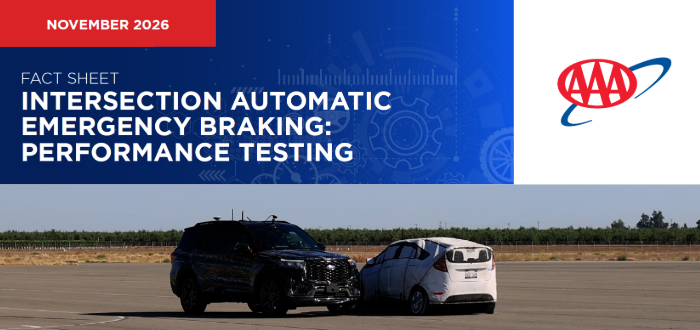
New testing of four 2026 model-year vehicles examines performance across different intersection crash scenarios
Automatic emergency braking (AEB) technology has advanced to address more complex crash situations, including those that occur at intersections. To better understand how the latest intersection AEB systems perform, AAA tested four 2026 model-year vehicles across different intersection crash scenarios. The results showed good performance in standardized tests, but limitations when new scenarios were presented. All four vehicles avoided a collision in the standardized left turn across oncoming traffic scenario. However, when a vehicle entered their path from a side road, three of the four systems did not prevent a collision.
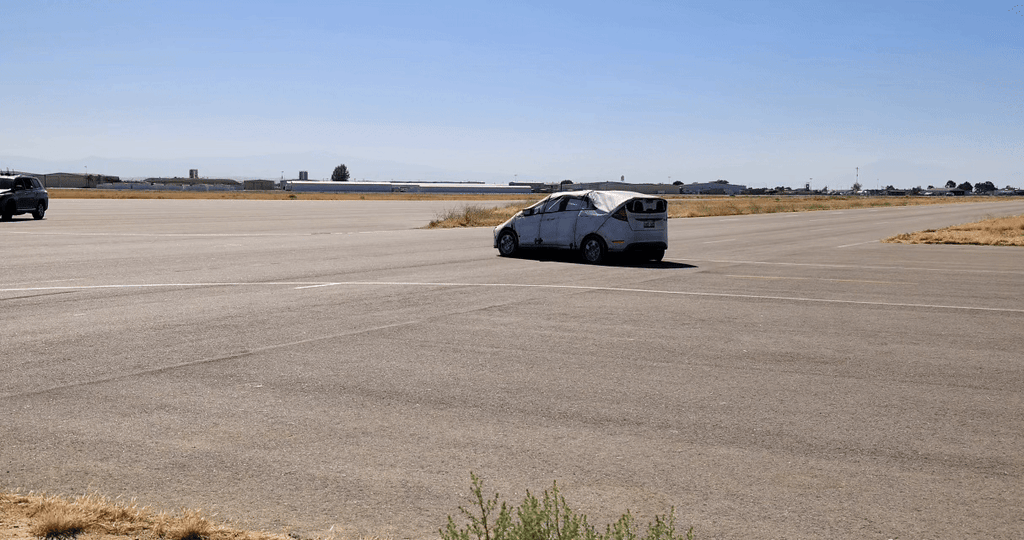
“Intersections are some of the most dangerous places on the road, said Greg Brannon, AAA’s Director of Automotive Engineering and Research. “AEB is making progress in the limited intersection scenarios it is tested to handle. Unfortunately, performance outside those scenarios is spotty.”
Historically, U.S. vehicle-to-vehicle AEB test protocols have focused on rear-end crashes. In 2020, Euro NCAP added a limited set of intersection tests, including a left turn across oncoming traffic. NHTSA developed a draft Intersection Safety Assist test procedure in 2019 for research purposes, but a final test standard has not been implemented. These limited protocols leave gaps in evaluating how systems perform in common U.S. intersection crash configurations.
How the Systems Were Tested
To understand how today’s intersection AEB systems perform, AAA partnered with the Automobile Club of Southern California’s Automotive Research Center to test four 2026 model-year vehicles with intersection AEB as standard equipment. Closed-course testing covered two intersection crash geometries, one turn-into-path scenario and three configurations of a left-turn-across-path scenario. A robotic soft vehicle target represented the other vehicle.
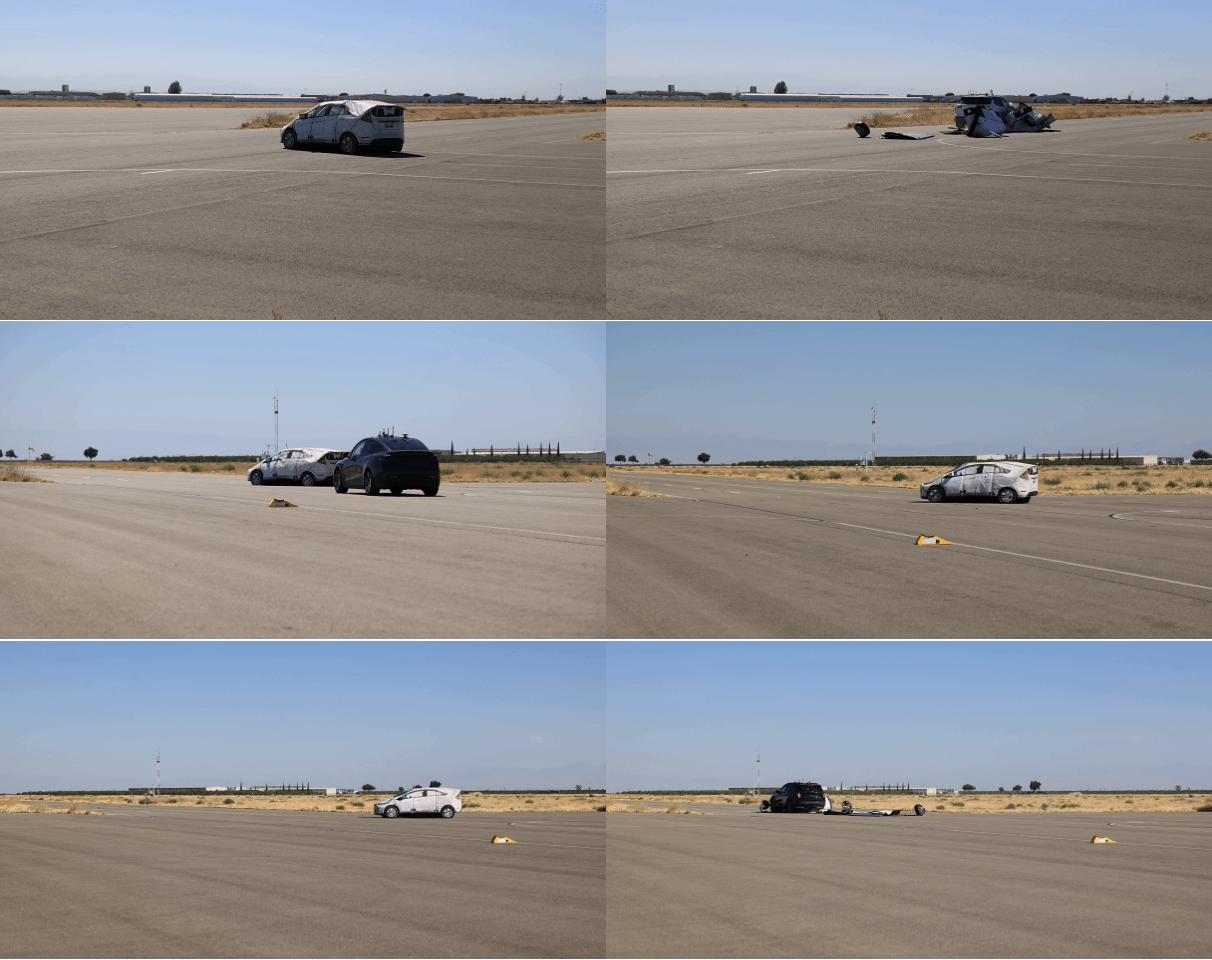
- Turn-into-path:The robotic soft car made a right-hand turn into the path of the tested vehicle, which was traveling straight. The test vehicle traveled straight at 30 mph while the soft vehicle target turned right into its path from a perpendicular road at 5 mph.
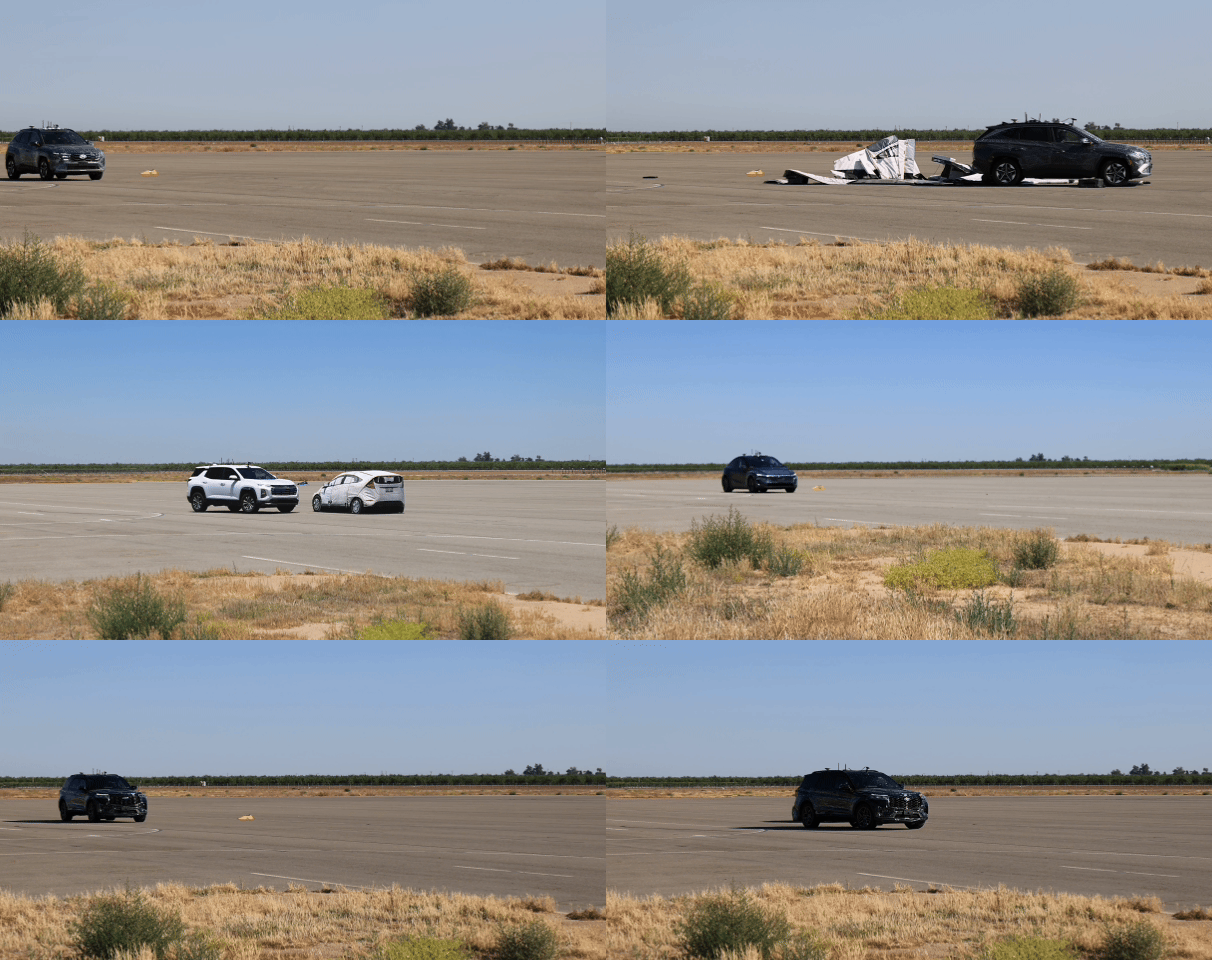
- Turn-across-path — standardized Euro NCAP configuration: With the turn signal activated, a steering robot guided the test vehicle through a left turn at 15 km/h (9.3 mph) across the path of the soft vehicle target traveling at 30 km/h (18.6 mph). This test followed standardized Euro NCAP evaluations.
- Turn-across-path — no turn signal: With the turn signal off, a steering robot guided the test vehicle to make a left turn at 15 km/h (9.3 mph) across the path of an oncoming soft vehicle target traveling at 30 km/h (18.6 mph)
- Turn-across-path — manual steering: The test was repeated at the same speeds with the turn signal activated, but a test driver manually steered the test vehicle through the left turn instead of the steering robot.
Key Results
Results for the four test scenarios described above are summarized below:
- Turn-into-path: AAA’s turn-into-path test revealed a significant capability gap. One vehicle avoided contact in every run, while the other 3 vehicles struck the soft car in every run.
- Turn-across-path — standardized Euro NCAP: With the turn signal activated and robotic steering, all four tested vehicles avoided a collision in every run.
- Turn-across-path — no turn signal: Removing the turn signal exposed a limitation in one vehicle: that vehicle provided neither a forward collision warning nor automatic braking and struck the soft car in all runs.
- Turn-across-path — manual steering: With the turn signal activated, replacing robotic steering with a test driver did not change collision-avoidance results. All four vehicles warned the driver, applied the brakes, and avoided the soft car in every run.
To learn more about each scenario, please read the full report.
Previous AAA Research
In 2022, AAA evaluated four vehicles equipped with standard AEB systems that did not include manufacturer-identified intersection AEB functionality. In two common intersection crash scenarios, the systems did not provide alerts or automatic braking during any of the test runs. Read AAA’s 2022 research.
Recommendations
- Automakers should work with researchers, regulators, and safety organizations to strengthen intersection AEB performance across a broader range of crash scenarios and real-world conditions, including the turn-into path scenario.
- Regulators and safety organizations can support continued progress by collaborating with automakers and researchers to broaden vehicle testing protocols to include more intersection scenarios and real-world conditions.
- Drivers can use intersection AEB as an added layer of protection while staying attentive behind the wheel. When entering an intersection, consider “covering the brake” by placing your right foot just above the brake pedal, with your heel on the floor. Be aware that nearby drivers may turn into your path and be ready to brake or steer if needed.
Methodology
AAA performed 74 closed-course runs conducted under controlled daytime conditions. Five runs were planned for each vehicle and configuration. If a vehicle provided neither a forward collision warning nor automatic braking in the first three runs of a configuration, testing of that configuration was stopped to reduce the risk of damage. Complete methodology and detailed results are available in the full report.
About AAA
Founded in 1902 by automotive enthusiasts advocating for better roads and safer mobility, AAA has grown into one of North America’s largest and most trusted membership organizations. Guided by our mission to Save Lives, Create Member Value, and Deliver Exceptional Experiences, AAA provides world-class roadside assistance, travel planning, exclusive discounts, and reliable financial and insurance services. Today, AAA enhances the life journey of more than 66 million members across North America, including over 58 million in the United States. Learn more or become a member at AAA.com.

